
Nigeria is one of the largest pharmaceutical markets in Africa and one of the most documentation-exacting. The regulator, the National Agency for Food and Drug Administration and Control (NAFDAC), lets no drug be imported, sold or distributed in the country until it is registered. For an overseas supplier that means the deal is not won on price, it is won on whether your importer can clear two gates cleanly. This is how those gates work, in the order a real file moves through them.
Why every drug entering Nigeria runs through NAFDAC.
NAFDAC is the gatekeeper. Under its product-registration mandate, no regulated product, drugs included, may be manufactured, imported, advertised, sold or distributed in Nigeria until it carries a NAFDAC registration. Applications are filed on NAFDAC's NAPAMS portal (the NAFDAC Automated Product Administration and Monitoring System).
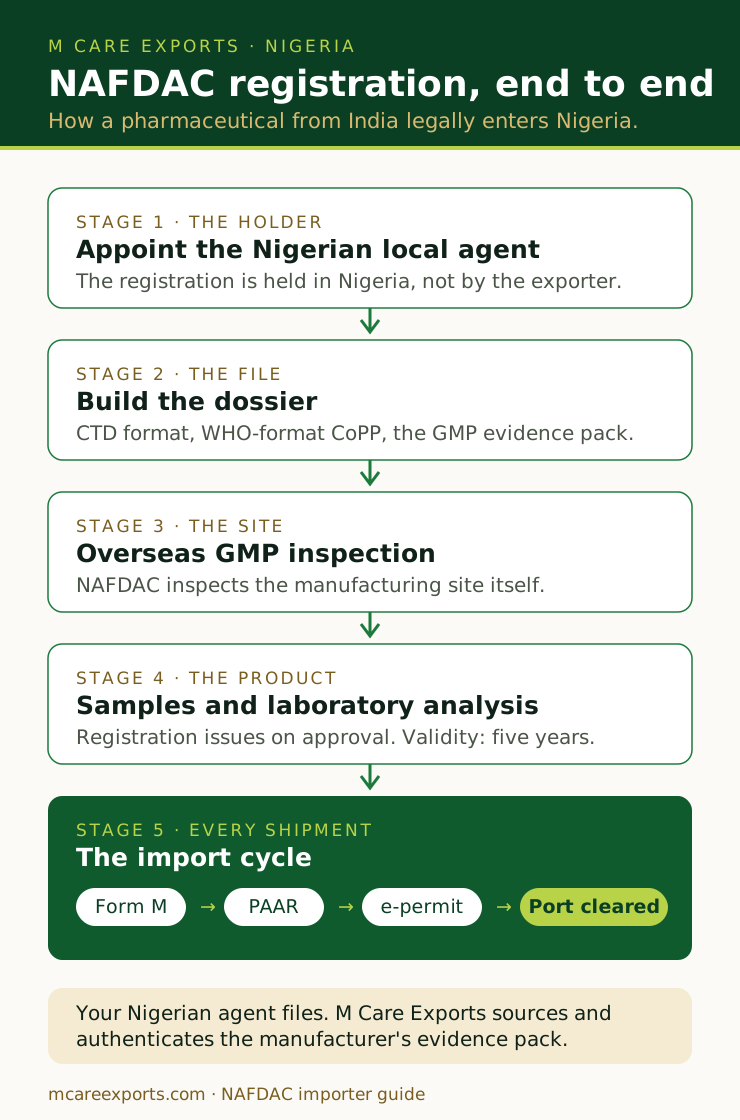
There are two tracks the buyer must clear, and confusing them is the most common early mistake. The first is a one-time product registration: the approval that lets a product legally exist on the Nigerian market. The second is per-shipment import clearance: the Form M, the e-permit and the Pre-Arrival Assessment Report that move each consignment through Customs. A product can be fully registered and a specific shipment still held at the port if the import-clearance chain is not in order. This guide covers both, registration first.
Who actually holds the registration: the local-agent rule.
The fact that organises everything else: a foreign manufacturer cannot register a product in its own name in Nigeria. It must either appoint a Nigerian local agent, authorised by a notarised Power of Attorney, or incorporate its own Nigerian company. The registration certificate is then held by that Nigerian entity, not by the factory abroad.
On top of that, the Nigerian importer must be properly licensed to handle medicines. The Pharmacists Council of Nigeria (PCN) requires a registered premises licence and a current superintendent-pharmacist licence before a company can import and distribute pharmaceutical products. So the registration holder is a NAFDAC- and PCN-licensed Nigerian importer, and the foreign supplier sits behind it as the source of evidence.
This is exactly where a merchant exporter who is not the manufacturer plugs in. M Care Exports does not register in Nigeria in its own name and does not pretend to. We source and authenticate the manufacturer's evidence pack and hand it to your Nigerian importer so they can file. The registration is theirs; our job is to make sure the file is clean before it is submitted.
The dossier: CTD, CoPP and the GMP evidence pack.
NAFDAC reviews an imported drug against a Common Technical Document (CTD) dossier, structured on the West African Health Organisation (WAHO/ECOWAS) CTD and following ICH conventions, and submitted through NAPAMS. The gating quality document inside it is the Certificate of Pharmaceutical Product (CoPP) in WHO format, issued by the drug regulator in the country of manufacture, valid at submission, and typically authenticated by the Nigerian Embassy or High Commission in the country of origin.
Around the CoPP sits the rest of the evidence pack: a Manufacturer's Certificate confirming the product is licensed for sale where it is made, a batch Certificate of Analysis on the testing laboratory's letterhead, a current GMP certificate, a Power of Attorney notarised in the country of manufacture, a trademark certificate registered under Class 5 (pharmaceuticals), and the product label artwork. Our WHO-GMP and CDSCO documentation guide covers how that certificate chain is produced on the Indian side.
The overseas GMP inspection of the manufacturing site.
NAFDAC does not take a GMP certificate on trust. As part of registration it carries out a current GMP (cGMP) inspection of the overseas manufacturing site. After a letter of invitation and payment of the GMP inspection fee, NAFDAC may travel to inspect the factory in the country of origin. A practical point worth budgeting for: the physical visit does not always take place, but the GMP fee remains payable either way, and the fee is charged per manufacturing site. Confirm the current figure against the published NAFDAC tariff before you quote a client, rather than relying on a number from a guide.
The dossier review, the GMP inspection outcome and the laboratory analysis are then considered together by NAFDAC's Food and Drug Registration Committee (FDRC) before a registration decision. For products already assessed by a recognised stringent regulatory authority, NAFDAC also operates a Reliance pathway that can draw on that prior assessment; eligibility depends on the product and the reference authority.
Samples, lab analysis and the import permit.
Before the product is registered, NAFDAC needs to test it, and bringing the test samples in is its own step. The applicant applies and pays for a sample import permit to import registration samples, which NAFDAC then subjects to laboratory analysis. This sample import permit is preliminary and is not the product approval, a distinction that trips up first-time importers who assume the permit to bring samples in is the registration itself.
The laboratory result joins the dossier and the GMP outcome in front of the FDRC. A clean, in-specification analysis on samples that match the dossier is what keeps this stage short.
Timelines and validity: what the file really takes.
NAFDAC publishes an end-to-end timeline of 240 working days from acceptance of a drug application, broken down across document verification, facility inspection and sampling, laboratory analysis, final vetting, and approval and certificate issuance. That is the figure to plan against. In practice many files run six to twelve months, and the reason is structural: when NAFDAC issues a compliance directive or query, the clock stops, and time begins counting afresh only once the applicant has remedied the issue, regardless of how fast they respond. A compliance directive must usually be answered within seven working days.
Once granted, the Certificate of Registration is valid for five years and is renewable on expiry. Renewal generally calls for an updated dossier, proof of continuing GMP compliance and a current labelling review. The lesson for a buyer is to lead with NAFDAC's published 240-working-day figure, treat six-to-twelve months as the realistic planning window, and protect the timeline by submitting a complete file so no compliance directive resets the clock.
From approval to port: Form M, PAAR and the e-permit.
Registration lets the product exist on the market; it does not, by itself, clear a container. Since 9 September 2019 NAFDAC no longer accepts non-digital permits for importation. The NAFDAC e-permit is processed on the Nigeria Single Window Trade Portal, and the Approval Reference Code on that e-licence must be entered to process the Form M for any NAFDAC-regulated product.
Form M is mandatory for all commercial imports into Nigeria. After the Form M and supporting documents are submitted, the Nigeria Customs Service issues a Pre-Arrival Assessment Report (PAAR), which is the document used to clear the goods through Customs. So a live shipment chains together: the product's NAFDAC registration number, the NAFDAC e-permit and its Approval Reference Code, the Form M, and then the PAAR at the port. A gap anywhere in that chain holds the consignment.
Why NAFDAC files stall, and how a merchant exporter de-risks them.
Most delays are not mysterious. The recurring causes are an incomplete or non-CTD dossier; a missing, expired or un-authenticated CoPP; and labelling artwork that does not meet NAFDAC convention. Nigerian labelling expects the generic and brand name, the manufacturer's name and full address, provision for the NAFDAC registration number, and batch, manufacturing and expiry details; where artwork is not yet compliant, NAFDAC may accept compliant artwork against a written manufacturer commitment that commercial product will match it.
This is the part of the job a capable exporter absorbs. M Care's role is to source, verify and assemble the manufacturer's GMP certificate, CoPP, CTD dossier, Certificate of Analysis, samples and compliant artwork into one inspection-ready set, so the Nigerian importer files on NAPAMS without the gaps that trigger a compliance directive and reset the clock. We treat the registration as the importer's, and the clean evidence pack behind it as ours.
Cold chain and GDP for temperature-sensitive lines.
For vaccines, biologics and other temperature-sensitive products, Nigeria's heat makes cold chain a compliance question, not just a logistics one. NAFDAC operates Good Storage and Distribution Practice (GSDP/GDP) guidelines, and vaccines and biologics should not be imported unless the facility has been inspected and found compliant with Good Storage and Good Distribution Practice, with a continuously monitored and documented cold chain.
In practice that means qualified packaging, data loggers on the consignment, GDP-compliant freight and an unbroken documentation trail from the Indian cold room to the Nigerian warehouse. Our cold-chain validation service and the West Africa cold-chain field note cover how that lane is run into the region.
FAQ
Does a foreign manufacturer or Indian exporter register a drug with NAFDAC directly?
No. A foreign manufacturer cannot register a product in its own name in Nigeria. It must appoint a Nigerian local agent authorised by a notarised Power of Attorney, or incorporate its own Nigerian company, and that local entity holds the registration. The Nigerian importer must also hold the relevant Pharmacists Council of Nigeria (PCN) premises and superintendent-pharmacist licences.
What is the CoPP and why does NAFDAC require it?
The Certificate of Pharmaceutical Product (CoPP) is a WHO-format certificate issued by the drug regulatory authority in the country of manufacture, confirming the product is licensed and made under GMP there. NAFDAC requires a valid CoPP for imported drugs, and it typically must be authenticated by the Nigerian Embassy or High Commission in the country of origin.
Does NAFDAC inspect the overseas manufacturing factory?
Yes. NAFDAC conducts a current GMP (cGMP) inspection of the foreign manufacturing site as part of registration. After a letter of invitation and payment of the GMP fee, NAFDAC may visit the factory in the country of origin. In practice the physical visit does not always take place, but the GMP fee remains payable.
How long does NAFDAC drug registration take?
NAFDAC's published timeline is 240 working days from acceptance of the application, broken into document verification, facility inspection and sampling, laboratory analysis, vetting, and approval. In practice many files take six to twelve months, because any NAFDAC compliance directive stops the clock and time only restarts once the issue is fixed.
How long is a NAFDAC registration valid?
A NAFDAC Certificate of Registration is valid for five years and is renewable on expiry. Renewal generally requires an updated dossier, proof of continuing GMP compliance and a current labelling review.
What is the difference between NAFDAC registration and the import permit or Form M?
They are separate. Product registration is the one-time approval that lets a product exist in the Nigerian market. To bring registration samples in beforehand you need a separate sample import permit. For each commercial shipment you then need a NAFDAC e-permit on the Nigeria Single Window Trade Portal, whose Approval Reference Code feeds the Form M, after which Nigeria Customs issues a Pre-Arrival Assessment Report (PAAR) for clearance.
How does a merchant exporter that is not the manufacturer support a Nigerian importer's NAFDAC file?
The merchant exporter's job is to source and authenticate the manufacturer's evidence pack: a valid WHO-format CoPP, a current GMP certificate, the CTD dossier, the Certificate of Analysis, samples and compliant artwork, then hand a clean, inspection-ready set to the Nigerian importer who files on NAPAMS. The registration is held by the importer; the exporter de-risks it by closing dossier gaps before submission.
Are there special rules for cold-chain products like vaccines and biologics?
Yes. NAFDAC's Good Storage and Distribution Practice guidelines apply, and vaccines and biologics should not be imported unless the facility has been inspected and found compliant with Good Storage and Good Distribution Practice. A continuously monitored, documented cold chain is required, which matters in Nigeria's high-temperature climate.
Send the molecule list. We'll return a NAFDAC-ready read.
Send the molecules and dose forms you need into Nigeria, and your importer or local agent if you have one. The Mumbai desk replies within one working day with WHO-GMP source options, the CoPP and CTD position per line, an honest registration timeline, and a view on which lines are ready to file now and which need a dossier or artwork step first. See the full Nigeria market page for how the lane works, and the African public-sector tender guide for the procurement side.